
Begin with your skin’s needs
A facial cleanser has a clear task: remove surface dirt, oil and residues while fitting the rest of your care routine. Start with your usual skin needs and the directions on the product. Resist choosing solely by fragrance, foam level or a dramatic “deep clean” promise. The useful everyday question is whether your skin feels comfortable after cleansing and moisturizing. [1]
Dry, oily and sensitive are useful starting points
Dry skin may feel rough or uncomfortable, while oily skin shows more noticeable surface shine. Sensitive skin may sting or burn with some products, and these characteristics can overlap. Treat the categories as starting points for selection rather than a self-diagnosis. If your skin’s behavior changes persistently, consider professional guidance before repeatedly switching to stronger cleansers. [1] [2]
A gentle cleansing technique
The American Academy of Dermatology recommends lukewarm water, fingertips and a gentle, non-abrasive cleanser. Avoid scrubbing with rough tools. Rinse carefully and pat dry with a soft towel. Cleansing is an everyday maintenance step, not a reason to create friction or leave a rinse-off product on for longer than directed. Follow the selected cleanser’s label rather than inventing contact times. [1]
How often should you wash?
Dermatology guidance generally advises limiting face washing to twice a day and after sweating. More frequent cleansing is not automatically more effective. Your routine also needs to reflect your skin and any professional instructions you receive. If washing produces persistent discomfort, do not assume that a stronger product or extra wash is the answer. [1]
Read actives in their product context
Ingredient names should be interpreted within the complete formula and the product’s rinse-off directions. A cleanser with a familiar serum ingredient has a different contact time and role from a leave-on treatment. Use the ingredient information to understand the intended care profile, while avoiding assumptions that the cleanser alone will deliver the same results as a treatment tested separately. [3]
HYDREX: dry and dehydrated skin
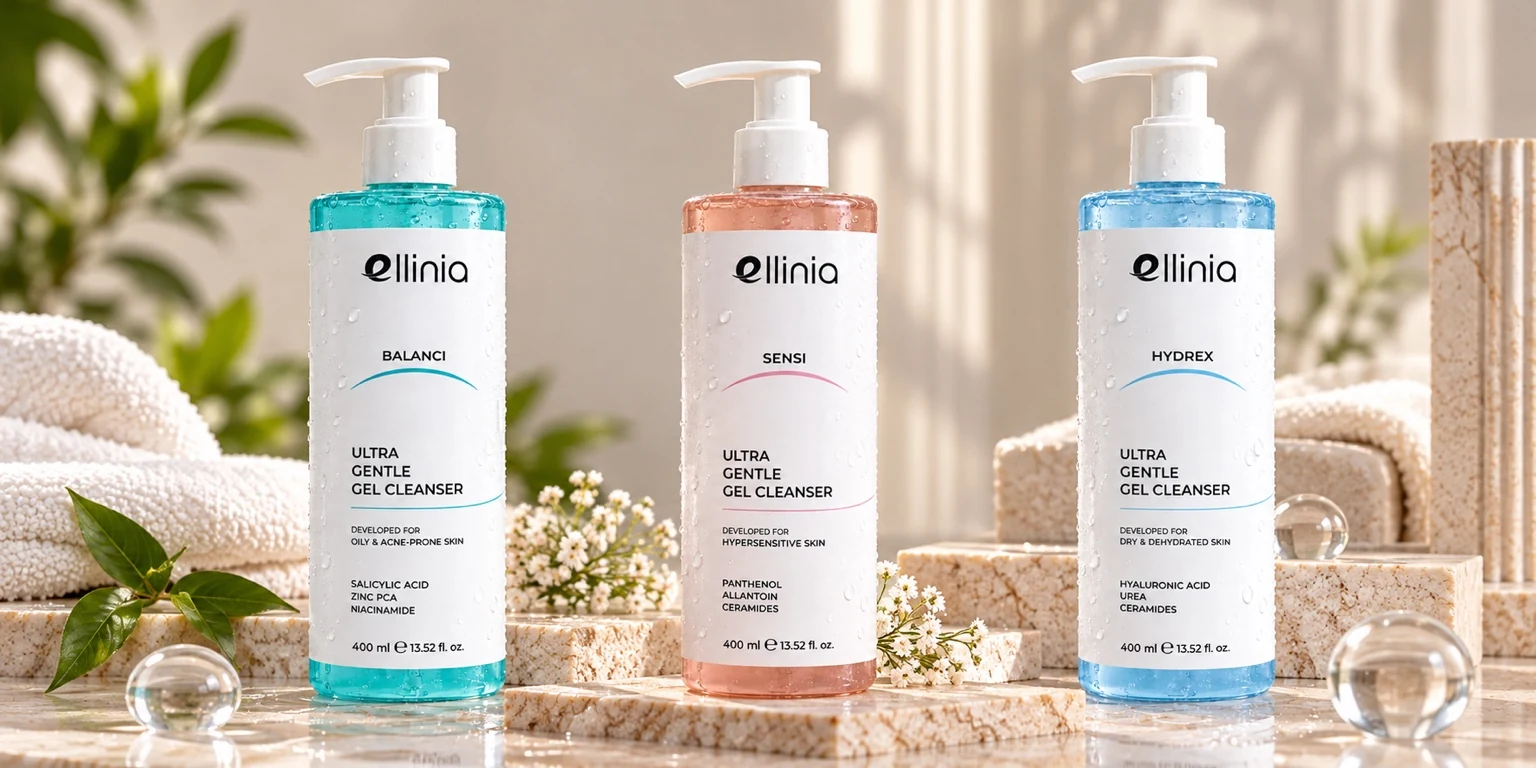
HYDREX Ultra Gentle Gel Cleanser is a 400 ml cleanser for dry and dehydrated skin. Its highlighted ingredients are hyaluronic acid, urea and ceramides. Consider it when selecting a cleanser for dry skin. Pair your choice with a suitable moisturizer and follow the cleanser’s own directions.
SENSI: sensitive skin
SENSI Ultra Gentle Gel Cleanser is a 400 ml cleanser developed for hypersensitive skin, featuring panthenol, allantoin and ceramides. Select it by its intended profile and your tolerance, rather than assuming any ingredient list guarantees no reaction. Test new skincare before introducing it widely and review how it works alongside the rest of your routine. [4]
BALANCI: oily and blemish-prone skin
BALANCI Ultra Gentle Gel Cleanser is a 400 ml cleanser for oily and blemish-prone skin with salicylic acid, Zinc PCA and niacinamide. Read its usage directions, especially when your routine already includes exfoliating products. A cleanser supports a care routine; persistent acne may require a separate treatment plan and professional assessment. [5]
The step after cleansing
For dry skin, dermatology guidance supports applying moisturizer after washing. Choose the next step deliberately instead of adding products simply because the skin feels very “clean.” Introduce changes individually. Persistent redness, burning, cracking or breakouts warrant advice; a comfortable routine is a better goal than chasing a tight or stripped feeling after every wash. [2]
Frequently asked questions
Is more foam a sign of better cleansing?
Foam level alone is not a quality score. Choose by the product’s intended use, directions and your skin’s comfort.
Should I wash more often when skin is oily?
Extra washing is not automatically helpful. Follow general guidance, your product instructions and any tailored professional advice.
How do I choose between the three Ellinia cleansers?
Explore HYDREX for dry and dehydrated skin, SENSI for sensitive skin and BALANCI for oily and blemish-prone skin; read the individual product page before choosing.
Sources & further reading
- American Academy of Dermatology — Face washing 101 ↗
- American Academy of Dermatology — Dermatologists’ top tips for relieving dry skin ↗
- American Academy of Dermatology — Skin care on a budget ↗
- American Academy of Dermatology — How to test skin care products ↗
- American Academy of Dermatology — How to safely exfoliate at home ↗
Ingredient research describes the published evidence; it does not establish clinical results for an Ellinia product.